In this guide
- Choosing a treatment starts with the cause
- Aeration, oxygenation, and mixing
- Phosphorus binders, algaecides, herbicides, and dye
- Biology, fish habitat, and treatment wetlands
- Watershed inputs and what reaches the lake
- Dredging and the new sediment surface
- Sequencing: Why timing and order matters
- Evaluating oxygenation before expansion
- References & resources
01Choosing a treatment starts with the cause
The same algae problem can lead to an oxygenation proposal, a phosphorus treatment, or a watershed project. Each can be useful, but each changes a different part of the system. We begin by identifying the source and the result the lake needs, then compare treatments by the mechanism they can change and the conditions they leave in place.
An algae bloom, for example, may respond quickly to an algaecide. If phosphorus continues to enter from the watershed or sediment, conditions for another bloom can remain. Conversely, reducing a major phosphorus source may improve the long-term outlook without removing an existing bloom quickly enough to meet an immediate access or operational need.
Restoration often needs both kinds of action: a response to the current problem and a change to the conditions that allow it to recur. The balance depends on the lake's use, the severity of the event, ecological constraints, and how quickly each option can act.
The initial assessment brings together bathymetry, inflows and outflows, seasonal temperature and oxygen, nutrient sources, sediment chemistry, and the biological community. A deep stratified reservoir and a shallow wind-mixed lake can have similar chlorophyll concentrations but require different interventions. A treatment intended to preserve cold-water fish habitat may also need to avoid the mixing that another project deliberately seeks.
| Intervention | Setting and objective | Primary purpose | What can persist after treatment |
|---|---|---|---|
| Aeration or circulation | Where mixing is desirable and resulting temperatures suit the intended habitat | Increase oxygen exchange or change water movement | Nutrients and sediment sources may remain; thermal structure can change. |
| Hypolimnetic oxygenation | Stratified water where deep oxygen and thermal structure both matter | Supply oxygen below the thermocline while limiting warming | Ongoing organic-matter and chemical oxygen demand still require attention. |
| Phosphorus inactivation | A defined dissolved or sediment phosphorus source that the material can reach | Reduce phosphate availability in water or sediment | External inputs and untreated sediment can replenish the available pool. |
| Algaecides or herbicides | An identified nuisance population requiring near-term control | Control susceptible organisms already present | Nutrients, surviving organisms and decomposition demand can remain. |
| Habitat and food-web management | Suitable light, habitat, and community conditions for the desired organisms | Support desired organisms and ecological functions | Recovery also depends on water quality, light and nutrient conditions. |
| Watershed controls | Controllable inflow sources delivering relevant nutrient or organic loads | Reduce the load reaching the lake | Legacy sediment loading may delay the lake response. |
| Dredging | Depth, access, contamination, or a demonstrably treatable sediment layer | Restore depth or remove targeted material | The exposed sediment and altered basin shape become part of the new system. |
Selection is based on the objective and mechanism. Several interventions may be justified by different benefits within one program. [1] [2] [3]
ENV evaluates treatments against a defined outcome before comparing products. Lower phosphorus release, fewer nuisance blooms, adequate oxygen at depth, improved plant access, and better source-water treatability are different objectives. They need measurements that show whether the proposed mechanism is operating and whether the intended benefit follows.
Reversibility also affects how much evidence to gather before committing. Dye and short-lived nuisance treatments need renewal; a sediment binder changes the interface for longer; dredging removes material and changes basin geometry. The harder an intervention is to reverse, the more valuable it becomes to resolve uncertainty about that new condition beforehand.
02Aeration, oxygenation, and mixing
Aeration supplies air; oxygenation supplies concentrated oxygen. Both can improve oxygen conditions, but they're different purchases because the gas supply, water movement, and energy requirements differ. Before comparing equipment, we establish whether the lake needs whole-column mixing, oxygen at a sediment surface, or an oxygenated layer that preserves cold-water habitat.
Bottom-diffused air systems can circulate water toward the surface, where gas exchange adds oxygen. Depending on the lake and system design, they may weaken or eliminate stratification. That can be useful, but it can also warm deeper water or transport accumulated nutrients toward the surface. Surface fountains primarily influence a more local zone and shouldn't be assumed to oxygenate an entire deep basin.
Hypolimnetic aeration and oxygenation aim to improve deep-water oxygen while retaining a useful thermal structure. Designs include air-lift systems, pure-oxygen line diffusers, submerged contactors such as Speece cones, and systems that dissolve oxygen in a side stream before returning water to the lake. Their circulation patterns, oxygen-transfer performance, energy requirements, and maintenance differ.
The rate at which deep water loses oxygen, the basin's depth, and the distance to power are useful early parts of that conversation. They connect the scale of the oxygen problem with the physical constraints of installation. Oxygen demand comes from both the water and sediment, and circulation changes how quickly oxygen reaches either one, so a motor rating alone won't explain the result.
For phosphorus control, sufficient oxygen must reach the relevant sediment area and the sediment must retain a useful capacity to bind phosphorus. Iron that has reacted with sulfide may be less available for that purpose. Oxygenation can improve habitat even where its phosphorus effect is limited, and those benefits should be evaluated separately.
Oxygen transfer, energy and oxygen demand
Air contains about 21% oxygen by volume. Supplying air is therefore different from supplying the same volume of oxygen, and neither gas-flow number states how much oxygen dissolves where it's needed. Transfer efficiency describes the fraction transferred to water; energy efficiency describes the oxygen transferred per unit of energy. System placement and circulation determine which water and sediment receive it. [1]
| Metric | Typical units | What it means |
|---|---|---|
| Oxygen transfer rate | kg O2/h or lb O2/h | Mass transferred per hour; identify whether it is measured in standard test water or under site conditions. |
| Aeration efficiency | kg O2/kWh or lb O2/kWh | Oxygen transferred for each unit of energy; higher is better only when test conditions and power boundaries are comparable. |
| Specific energy use | kWh/kg O2 | Energy used per mass delivered; specify whether oxygen generation, compression and pumping are included. |
| Transfer efficiency | % of supplied oxygen dissolved | A gas-transfer measure, distinct from electrical efficiency and whole-lake coverage. |
| Sediment oxygen demand (SOD) | g O2/m²/day | Demand at the sediment interface under the measurement conditions. |
| Areal hypolimnetic oxygen depletion (AHOD) | g O2/m²/day | A water-column inventory change normalized to area; includes more than sediment demand alone. |
One kg O₂/kWh equals about 2.20 lb O₂/kWh. Units make comparisons possible; they don't make unlike tests equivalent. [1]
Standard oxygen-transfer tests commonly use specified temperature, oxygen deficit and water conditions. A field installation operates with changing temperature, dissolved oxygen, depth, fouling and circulation. A brochure efficiency can therefore be a useful benchmark without being the energy requirement of the proposed lake project.
Demand can also increase when an oxygenation system starts. Oxidation of accumulated reduced substances and increased transport across the sediment boundary layer can consume added oxygen. In two water-supply reservoirs, Gantzer and colleagues linked increased demand to diffuser-induced mixing and found that background and induced demand declined over several years of operation. [14] We examine initial demand, sustained demand, oxygen distribution and the intended habitat response separately. A slow rise in oxygen after start-up needs that assessment before deciding whether the system is undersized.
ENV's internal literature review and project case studies show how widely energy performance varies among device classes. The ranges below are useful context for a proposal, provided the comparison keeps standard tests separate from field results and identifies which energy inputs are included. Boyd's published paddlewheel tests illustrate the issue: 2.6 – 3.0 kg O₂/kWh on brake power became about 2.2 on electrical input, or wire power. [4]
We assess delivered oxygen, its spatial distribution, temperature changes, constituent responses, and operating costs together. A high oxygen reading near the equipment isn't evidence of basin-wide performance. Nor does an efficiency comparison mean much unless it includes comparable boundaries for oxygen supply, compression, pumping, and transfer.
| System example | Reported range | How to read it |
|---|---|---|
| Surface paddlewheel | ~2.6 – 3.0 kg O₂/kWh | Boyd’s tested design on brake power; ~2.2 kg O₂/kWh on wire power. |
| Propeller-aspirator | ~1.7 – 1.9 kg O₂/kWh | Review range; confirm test conditions and electrical-input boundary before comparing proposals. |
| Air-driven hypolimnetic aerator | ~0.18 – 1.09 kg O₂/kWh | Review range spanning different installations and water-transfer conditions. |
| In-lake oxygen cone | ~0.4 – 0.8 kWh/kg O₂ dissolved | Energy per oxygen mass (the reciprocal unit); oxygen production/supply may be outside the reported boundary. |
These are literature and project examples, not a ranking under one common test. Compare the delivered oxygen at the target depth, sustained demand, and complete energy boundary (including oxygen supply where applicable) before estimating operating cost.
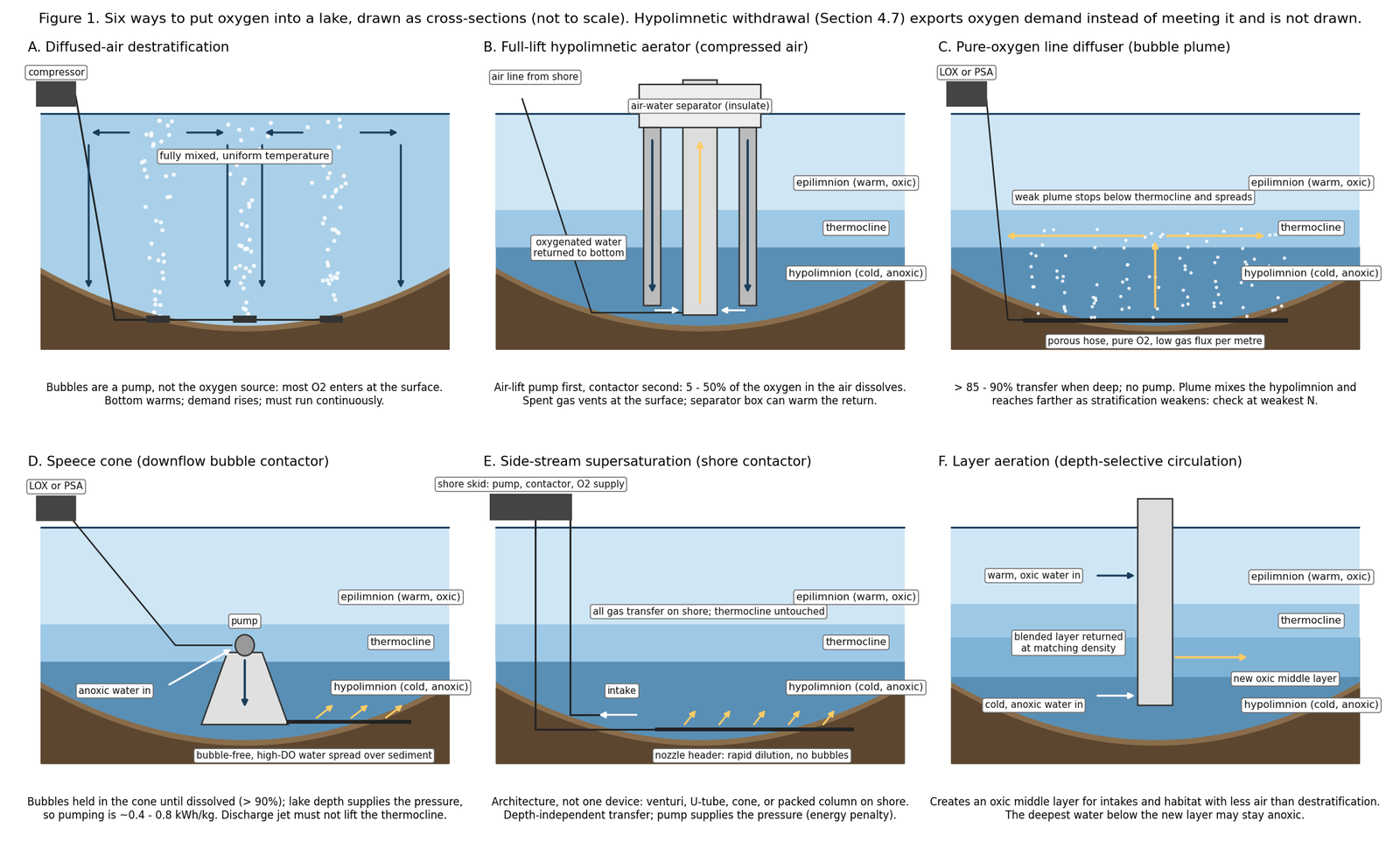
| Approach | Intended effect | Important limitation |
|---|---|---|
| Diffused-air circulation | Increase circulation and oxygen exchange | May change stratification, deep-water temperature, and nutrient transport |
| Hypolimnetic aeration | Supply oxygen from air while limiting whole-lake mixing | Return-water temperature, gas transfer, and circulation require evaluation |
| Pure-oxygen systems | Deliver oxygen to a selected layer or sediment area | Distribution, demand, oxygen supply, and plume behavior determine performance |
| Selective layer circulation | Improve a targeted water layer | The deepest water and sediment may remain oxygen-depleted |


03Phosphorus binders, algaecides, herbicides, and dye
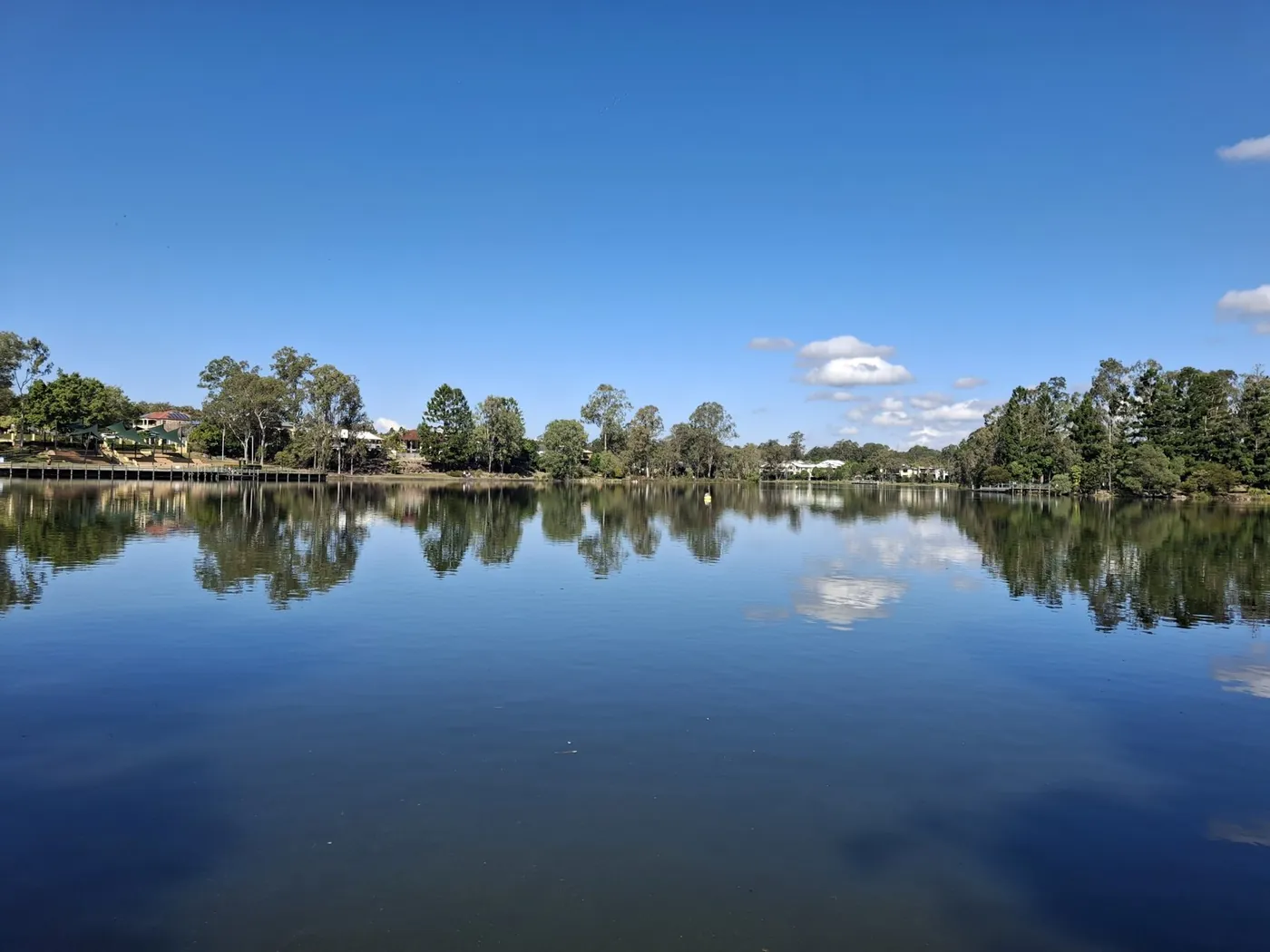
A clear lake after treatment can result from removing suspended material, suppressing algae, or reducing the phosphorus available for future growth. Those are different achievements. We separate them when reviewing a treatment history because immediate clearing can be valuable even when the next decision is still how to control the sediment source.
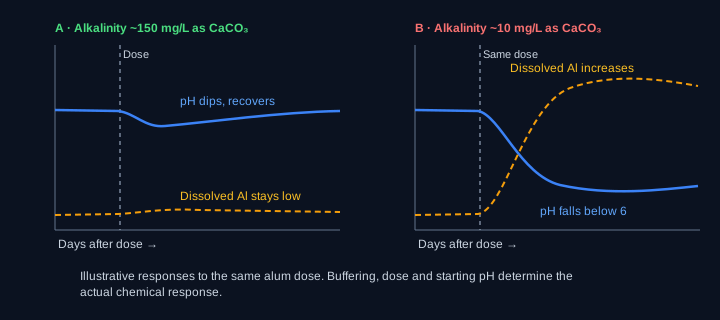
Aluminum-based binders form hydroxide floc that can capture phosphate and settle onto the sediment. Their performance and ecological suitability depend on formulation, pH, alkalinity, distribution, and the phosphorus being targeted. Retention doesn't require continuously oxygenated conditions in the same way as iron binding, but chemical stability and exposure still need evaluation. Aluminum and lanthanum binders change the form of the sediment phosphorus into aluminum-bound or lanthanum phosphate fractions, which is how post-treatment sediment analysis confirms where the phosphorus went.
Lanthanum-based materials use a different binding reaction. Delivery can include lanthanum-modified bentonite applied as a suspension and formulations in which an iron-based coating influences exposure of the lanthanum under reducing conditions. The carrier and release mechanism matter; a generic product category isn't enough to predict distribution or performance. Organic matter, competing substances, and lake chemistry can affect the result.[5]
Calcium deserves more explanation because calcium phosphates occur naturally in sediment, yet reproducing that retention reliably as a lake treatment is difficult. Hydroxyapatite is a possible stable product, fluorapatite requires fluoride, and intermediate phases can include brushite, monetite, octacalcium phosphate, and tricalcium phosphate. Whether a particular phase forms depends on saturation, nucleation, and competing reactions, rather than simply adding calcium to phosphorus-rich sediment. [13]
Lime raises pH and calcium availability, but water-column application can expose organisms to high pH before the material reaches the sediment. Carbonate competes for calcium, and magnesium and organic compounds can inhibit crystal formation or favor more soluble calcium-phosphate phases. Controlled experiments demonstrate strong inhibition by humic material, rather than a universal absence of precipitation in organic sediment. The practical difficulty is obtaining enough contact and stable retention at the interface without creating a biological problem along the way. That's why we don't treat calcium as a routine peer of established aluminum, lanthanum, and oxygenation approaches for lakes. [13]
Algaecides and herbicides can provide valuable short-term control. Their selectivity, exposure requirements, effects on non-target organisms, and the fate of the treated biomass differ. Decomposition can consume oxygen and recycle nutrients. Damage to toxin-producing cyanobacteria can release dissolved toxins, so a treatment near a drinking-water intake or recreation area needs an appropriate monitoring and response framework.
The timescale explains why nuisance control and prevention need separate objectives. ENV's treatment records use roughly 2 – 4 weeks as a common bloom-regrowth interval after a knockdown, with peroxide often dissipating within 1 – 2 days and dissolved, bioavailable copper declining through reactions and partitioning over roughly 1 – 2 weeks. These are field-planning ranges, not guaranteed exposure or regrowth periods. Copper remains in the system after it leaves the water; it doesn't degrade, and its toxicity depends on dissolved organic carbon, pH, and hardness. [7] [8]
Dye can reduce growth where available light is an important control. It doesn't bind phosphorus or remove a nutrient source. Flushing, water color, depth, the position of the target organisms, and effects on desirable plants influence whether it's useful.
Product labels and applicable permits are part of treatment design. For example, California's aquatic pesticide permit program has specific coverage and monitoring provisions. There's no single permitting timetable that applies to every project or jurisdiction.
| Treatment class | Technical distinction | Selection consideration |
|---|---|---|
| Alum, PAC and ACH | Different aluminum formulations form phosphate-binding hydroxide floc; their alkalinity demand differs. | Buffering capacity, pH, mixing and contact with the intended phosphorus pool |
| Lanthanum materials | Phosphate can be retained in a low-solubility mineral; carrier and activation mechanism differ among formulations. | Distribution, organic matter, water chemistry and the targeted dissolved or sediment source |
| Iron additions | Increase potential binding capacity in suitable geochemical conditions. | Reduction, sulfide and the availability of reactive iron |
| Copper-based algaecides | Toxicity and effectiveness depend on bioavailable copper, not just the total concentration. | Species, dissolved organic carbon, pH, hardness, exposure and sediment accumulation |
| Peroxide-based algaecides | Oxidative damage to susceptible cells; persistence depends on demand and conditions. | Species response, biomass, non-target exposure and the fate of released cell contents |
| Aquatic herbicides | Modes of action and uptake differ among products and plants. | Identification, life stage, selectivity, exposure and decomposition |
| Dyes | Reduce light available below the surface. | Lake depth, flushing, water color and the position of the target growth |
A product class isn't a treatment design. A useful proposal connects the mechanism to site chemistry and the intended biological outcome. [6] [7] [8]
A short water-column improvement also isn't the same as treating the releasable sediment pool. ENV's planning experience distinguishes reactive spot phosphorus treatments that may last roughly 1 – 3 months from some water-column-sized applications that may deliver about 18 – 36 months. Continuing inputs and the material actually contacted can shorten either response. The interactive Lake P companion explains the aluminum and lanthanum mechanisms behind that distinction.
04Biology, fish habitat, and treatment wetlands
Biological processes can support clearer water and more stable habitat. Aquatic plants can reduce sediment disturbance, provide refuge, and take up nutrients. Zooplankton can graze algae. Fish communities can influence both grazing and sediment resuspension. These interactions depend on which organisms are present and the physical conditions of the lake.
Plant biomass isn't the same as habitat quality. A diverse native community can provide useful structure while dense nuisance growth restricts access, shades other plants, and contributes to local oxygen depletion. Management can preserve beneficial areas while treating navigation routes, intake zones, or invasive populations.
Fish need suitable temperature and oxygen together. Adding oxygen without preserving an appropriate temperature range may not restore the intended habitat. Likewise, adding habitat structures can't compensate for water that becomes physiologically unsuitable during the critical season. Species, life stage, and duration of exposure determine the relevant conditions.
Constructed wetlands can settle particles, retain phosphate on mineral surfaces, accumulate phosphorus in soil, and remove nitrogen through microbial transformations. The South Florida treatment wetlands demonstrate the value of vegetation and soil accumulation at scale. However, phosphorus stored in a wetland still needs a long-term budget: inflow, outflow, burial, and any material physically removed from the system. [9]
Plant tissue commonly contains roughly 0.3 – 0.5% phosphorus by dry weight, with values up to about 1% in the material described in ENV's technical guidance. Harvesting and removing that biomass exports phosphorus; allowing it to die in place returns part of the stored nutrient to active cycling and adds oxygen demand. Harvest is an operational choice, not the only retention mechanism, and its value depends on the biomass removed relative to the incoming load.
Food-web manipulation and filter-feeding organisms require similar care. They can change where nutrients move without removing them from the system. Grazing, excretion, biodeposition, habitat suitability, and risks associated with introduced species all affect the result. Native ecology and applicable permissions constrain what is appropriate.
Why ecological recovery can be nonlinear
In some shallow lakes, plants, sediment stability and grazing help sustain a clear-water state. Loss of plants can increase resuspension, reduce refuge for grazers and make it harder for vegetation to re-establish. The nutrient conditions required to recover clarity may therefore differ from those present before the lake became turbid. This path dependence is called hysteresis. It helps explain why reducing one input may not immediately recreate the earlier ecosystem. [3]
A treatment wetland changes both hydraulics and biogeochemistry. Settling removes particle-associated nutrients; surfaces and soils can retain phosphate; microbial processes can remove nitrogen through denitrification. Nitrogen gas can leave the system, whereas phosphorus retained in soil or vegetation remains a stored inventory unless physically exported or buried beyond active recycling. The two nutrients therefore have different long-term management requirements. [9]
ENV evaluates biological measures as part of the lake's nutrient and habitat system. They can complement chemistry and physical management, but their benefits should be supported by a plausible mechanism and measured over a relevant period.
Storage can weaken as sorption sites fill or prolonged reducing conditions dissolve iron phases that retained phosphate. Drying, rewetting, and short-circuiting flow can also change performance. A wetland may then export phosphorus while continuing to remove nitrogen by denitrification. We examine those functions separately so that a useful wetland isn't credited with phosphorus removal it no longer provides, or dismissed for services it still performs. [9]


05Watershed inputs and what reaches the lake
Reducing new nutrient inputs can protect the value of an in-lake treatment. The useful target is the load that reaches the lake, in a form and season relevant to the problem. A large drainage area isn't necessarily the largest controllable source, and an inflow with a high concentration may contribute little mass if its flow is small.
Stormwater, wastewater, agricultural drainage, eroding soil, and groundwater require different evidence and controls. Flow and concentration must be considered together. Sampling only during dry weather can miss event-driven inputs, while a single storm sample can overstate how representative that condition is.
A stormwater pond can settle phosphorus-rich particles during an event and release dissolved phosphorus during the following warm, stagnant period. The same basin can therefore change from a sink to a source. Paired flow and chemical-form measurements help identify whether maintenance, hydraulic changes, or treatment of the accumulated material would improve what actually reaches the lake.
Internal loading can delay recovery after external inputs decline. That doesn't make watershed work ineffective; it means the existing sediment inventory and new inputs need to be assessed together. Conversely, continued external loading can shorten the useful life of an in-lake phosphorus treatment.
A practical strategy identifies the major sources, the portion that can be influenced, the organizations able to act, and how lake response will be measured. We use that assessment to decide whether watershed work, sediment control, or a combined program is likely to produce the required improvement.
Residence time connects watershed inputs with in-lake response. Rapid flushing can export nutrients and organisms, while a long residence time gives material more opportunity to settle, recycle and support growth. Inflow management also has to distinguish dissolved phosphorus from phosphorus attached to eroding particles: reducing sediment delivery can be valuable without capturing every biologically available nutrient form. [2]
06Dredging and the new sediment surface
Dredging may be necessary to restore depth, remove contaminated material, maintain access, or address a well-defined sediment source. For phosphorus control alone, it deserves careful comparison with less disruptive approaches because the volume removed can be large relative to the chemically active surface layer.
The central question is what becomes the new sediment-water interface after the cut. A buried layer can contain organic phosphorus that was preserved under anoxia, then starts cycling differently when it's exposed. A sandy or mineral-rich surface generally carries little releasable phosphorus, while exposed organic-rich sediment with a large iron-bound and organic fraction can release more than the layer it replaced. Removing the present surface can therefore improve phosphorus control, leave it largely unchanged, or create a more reactive surface. We compare cores from the proposed new surface with the existing one before treating excavation volume as a water-quality benefit.
Changes in depth and shape can also alter mixing and stratification. A deeper basin may provide useful storage or habitat, but it can develop different oxygen conditions. Dredging should therefore be evaluated as a change to both sediment chemistry and lake geometry.
The comparison is the lake today against the lake after the proposed cut: sediment chemistry, oxygen demand, mixing, habitat, and the benefit of added depth. Access, contaminated-material handling, and permits still affect feasibility, but they come after establishing whether the new lakebed will support the intended water-quality improvement.
A dredging assessment can compare the existing and proposed sediment surfaces for releasable phosphorus, organic matter, metal chemistry and oxygen demand. It can also distinguish an access or storage project that has a water-quality benefit from a phosphorus-control project whose principal cost is excavation. Those are different justifications, even when the same contractor and equipment would undertake the work. [10]
We compare the expected behavior of the new interface with the existing one and with alternative controls. Where dredging is justified by several objectives, the assessment can help distinguish the water-quality benefit from benefits related to depth or access.
07Sequencing: Why timing and order matters
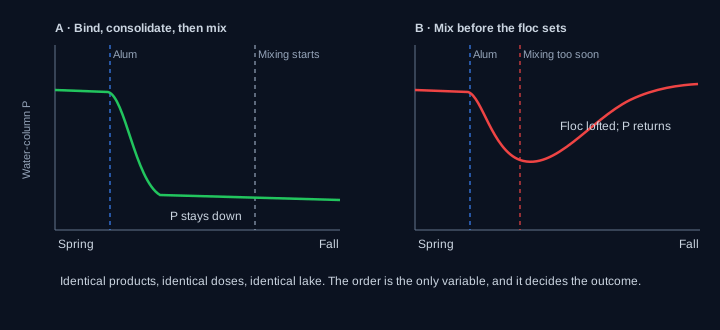
Combining treatments works best when each one prepares conditions the next one needs. A settling coagulant floc needs time to reach the target surface; mixing too soon can redistribute it along with nutrient-rich bottom water. Oxygenation needs both adequate delivery and sediment chemistry capable of using the restored oxygen for phosphorus retention. Low-alkalinity water needs an aluminum formulation and application strategy that avoid an excessive pH drop. These are compatibility questions we resolve before scheduling the work.
The order also follows the source. If a tributary keeps delivering phosphorus and organic matter, an in-lake treatment can still provide a worthwhile benefit, but its maintenance requirement will differ from a treatment following substantial source reduction. Sometimes immediate nuisance control is justified while that longer program is developed. In other cases, placing a binder before sediment release begins can reduce the need for a reactive bloom treatment later.
The same reasoning applies to a treatment used on its own. We plan a sediment binder before the local release season, with suitable pH and time for distribution and settling; oxygenation starts before a large oxygen deficit and reduced-constituent pool accumulate. Plant treatment follows the target species' growth stage and the oxygen consequences of biomass decay. The calendar comes from those processes, rather than a universal month or a fixed sequence of products.
A well-designed trial can answer an important uncertainty. Its comparison areas, duration, operating conditions, and outcome measures should be appropriate to the proposed use. A trial that only records appearance may miss nutrient redistribution, habitat effects, or a short-lived response.
| Treatment or combination | Why order or timing matters | What the decision needs |
|---|---|---|
| Phosphorus binder on its own | Preventive placement may reduce the nutrient supply available during a later growth period. | Source confirmation, phosphorus distribution, application chemistry and seasonal conditions |
| Oxygenation on its own | Starting before extensive depletion differs from oxidizing an already accumulated reduced inventory. | Thermal structure, oxygen demand, distribution and the target constituent or habitat |
| Nuisance-biomass control with nutrient management | Rapid control addresses present growth; source management addresses its replacement. | Exposure needs, toxin risk, decomposition demand and the continuing nutrient supply |
| Plant management with sediment protection | Removing dense growth can improve access while changing resuspension and nutrient cycling. | Desired vegetation, treatment extent, biomass fate and habitat objectives |
| Watershed work with internal-load control | New inputs can replenish the pool that an in-lake treatment is intended to manage. | Magnitude, form and timing of the external and internal loads |
These are planning considerations, not a prescribed sequence. Product labels, site conditions, permits and the immediate need for relief all influence implementation. [11] [6] [12]
ENV can develop the treatment strategy, review an existing proposal, or provide independent performance evaluation. The objective is a program in which each intervention has a defined purpose and the results provide a clear basis for the next decision.
We sell no chemicals and no equipment; the recommendation is the product. If you already have a proposal or equipment in the lake, we can review how the intended mechanism fits the seasonal conditions and where another intervention would complement it.
Schedule a conversation about treatment timing and compatibility →
Case studyEvaluating oxygenation before expansion
In a large urban tidal lake in California, low deep-water oxygen and internal phosphorus release contributed to algae problems with public-health and wildlife implications. The management decision was whether, and where, expanded oxygenation would provide sufficient benefit.
ENV evaluated treated and comparison stations alongside periods when the system was operating and not operating. The analysis also assessed a turbidity-related indicator that preceded oxygen depletion. These comparisons were used to distinguish equipment operation from a measurable water-quality response.
The project record reports roughly one-third lower chlorophyll-a in oxygenated zones relative to comparison zones and an approximately two-week early-warning interval for oxygen depletion. These are site-specific observational results, not promised performance for another lake. Together they provided evidence for an expansion decision and a more informed operating response.
References & resources
Research and technical guidance supporting this guide. Advisory and regulatory information checked September 2026; local requirements may differ.
- Singleton & Little (2006). Designing hypolimnetic aeration and oxygenation systems: A review. ↩
- Søndergaard, Jensen & Jeppesen (2003). Role of sediment and internal loading of phosphorus in shallow lakes. ↩
- Scheffer et al. (1993). Alternative equilibria in shallow lakes. ↩
- Boyd (1998). Pond water aeration systems. ↩
- Spears et al. (2016). A meta-analysis of water quality and aquatic macrophyte responses in 18 lakes treated with lanthanum modified bentonite (Phoslock®). ↩
- Huser et al. (2016). Longevity and effectiveness of aluminum addition to reduce sediment phosphorus release and restore lake water quality. ↩
- Jančula & Maršálek (2011). Critical review of actually available chemical compounds for prevention and management of cyanobacterial blooms. ↩
- U.S. EPA (current guidance). Copper Biotic Ligand Model. ↩
- South Florida Water Management District (current guidance). Stormwater Treatment Areas. ↩
- Nürnberg (2009). Assessing internal phosphorus load: Problems to be solved. ↩
- California State Water Resources Control Board (current permit information). Aquatic Pesticides: Weed Control. ↩
- Williams, Szaro & Shapiro (2009 printing). Adaptive Management: The U.S. Department of the Interior Technical Guide. ↩
- Cao, Harris, Josan & Nair (2007). Inhibition of calcium phosphate precipitation under environmentally-relevant conditions. ↩
- Gantzer, Bryant & Little (2009). Effect of hypolimnetic oxygenation on oxygen depletion rates in two water-supply reservoirs. ↩
Let's talk about your restoration options
We can assess the causes of a recurring problem, compare restoration options, or independently evaluate treatment performance.
A conversation can start with what you've observed. Treatment history, equipment information, and your observations can help us compare what has worked, what remains unresolved, and which interventions fit the lake.
Schedule a conversation